
The Basket Index: What Easter Is Really Saying About the Economy
Forget the pastels. In 2026, the Easter basket is a $24.9 billion stress test for the American consumer. Americans are expected to spend a record $195.59 per person on Easter this year, even as inflation expectations have climbed, hiring has softened, and the consumer mood…
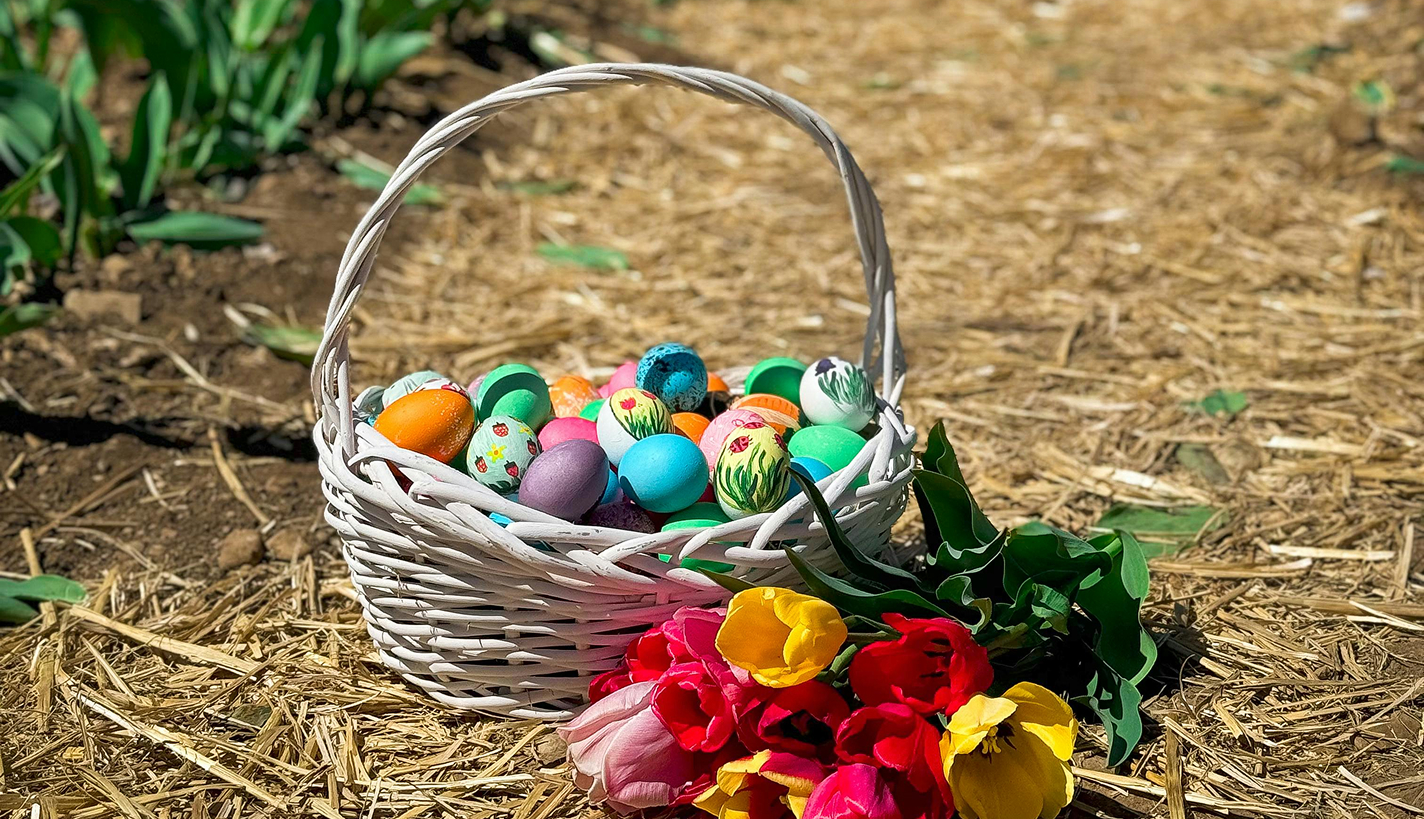
Forget the pastels. In 2026, the Easter basket is a $24.9 billion stress test for the American consumer.
Americans are expected to spend a record $195.59 per person on Easter this year, even as inflation expectations have climbed, hiring has softened, and the consumer mood looks a lot less cheerful than the holiday aisle does. That is what makes the basket so useful. It takes a bunch of things the market usually talks about separately — staples, treats, freight, imports, packaging, brand power — and shoves them into one cheerful little receipt.
Easter has always had one foot in ritual and one in commerce. The bunny came over through Pennsylvania German tradition, and by 1878 the White House had already turned egg rolling into an annual event. That long history is part of why the basket works so well as a read on the present. It is an old ritual absorbing a very current economic mood.
And right now that mood is not carefree. It is something closer to angry spending. People are still showing up for the candy, the flowers, and the meal, but they are doing it with less slack, less patience, and a much sharper eye on the total. Once you read the basket item by item, the economy starts talking.
A tale of two eggs
If you want the cleanest explanation for why 2026 still feels economically weird, start with the eggs.
The real egg has finally stopped acting like a luxury item. Retail egg prices plunged 42.1% in February from a year earlier, and USDA expects them to fall 26.8% over 2026 as production recovers. After several years in which a carton of eggs felt faintly hostile, that counts as real relief.
The chocolate egg is living in a completely different economy. Prices for sugar and sweets were up 9.0% in February from a year earlier and are forecast to rise 9.8% this year. So the biological egg is calming down. The fake one is still charging like it just hired a publicist.
That split is the story in miniature. Inflation is not fading in one neat, satisfying wave. It is unwinding aisle by aisle, and consumers do not experience that as progress so much as a fresh set of annoyances. Breakfast gets cheaper. The bunny does not. Nobody feels richer. They just feel like the economy found a new way to be annoying.
Cocoa’s long hangover
Easter is not just a candy holiday. It is a chocolate holiday pretending to be tasteful.
Roughly 90% of Easter baskets include chocolate, and shoppers are expected to spend about $3.3 billion on Easter candy this year. That makes the candy aisle a better market signal than its pastel branding lets on.
The weird part is that cocoa itself has already cooled far more than the shopper has. Cocoa prices have fallen more than 70% from their late-2024 peak, but Easter chocolate is still expensive because manufacturers bought earlier, hedged earlier, and built spring inventory when the market was still ugly. Any meaningful relief may not really show up at retail until later in 2026, closer to Halloween. The chart moved on. The bunny did not.
And that lag is the whole point. Lower input costs do not instantly become cheaper retail prices, because between the commodity and the checkout line sit contracts, hedges, freight, packaging, and a management team that would be perfectly happy to keep charging yesterday’s price for as long as your nostalgia will tolerate it. The cocoa crisis may be over on paper. The candy aisle is still workshopping its response.
The candy aisle balance sheet
This is where the basket stops being seasonal and starts looking like an earnings note.
Hershey still sounds like a company that thinks it can charge through the mess. Its 2026 outlook calls for 4% to 5% full-year net sales growth, driven by price realization, innovation, seasonal activations, and advertising. That is polished corporate language for a simple thesis: people may complain, but enough of them will still buy.
Mondelez, the global snacking giant behind brands like Oreo, Cadbury, and Ritz, sounds less relaxed, which is what makes it interesting. Higher cocoa costs have run into weaker demand from shoppers already stretching their budgets, and the company has been seeing more trading down after multiple rounds of price hikes. Fourth-quarter organic revenue growth came in at 5.1%, but that was driven by pricing, while volume/mix fell 4.8 points and pricing contributed 9.9 points. For 2026, Mondelez expects organic revenue growth in the range of flat to 2%.
That is not a company flexing brand power. That is a company finding the threshold of nonsense.
And that is the real investor lesson from Easter candy in 2026. The winner is not simply the company that raised prices. It is the one that raised prices without retraining the customer to wait for a promotion, buy the store brand, or decide the mini eggs were not worth the emotional effort.
Jet fuel with petals
Flowers are the softest-looking part of the basket and one of the hardest-headed.
The U.S. imported nearly $3.3 billion worth of cut flowers, plants, and nursery stock in 2022 from 81 countries, with Colombia accounting for about 37% of U.S. cut flower and nursery stock value. More than 95% of cut flowers are transported by air. The bouquet is not just decorative. It is jet fuel with petals.
That matters a lot more in 2026 than it would in a quieter year. Rising gasoline prices, slower supplier deliveries, and broader shipping disruptions are putting pressure back into the system. If air-shipped lilies are feeling the squeeze, that is a canary in the coal mine for the broader cold-chain ecosystem, the speed-and-temperature business that moves everything from produce to dairy to meat. In 2026, “perishable” is increasingly just another word for “expensive logistics.”
That is what makes the flower section more than a cute detour. It is the clearest reminder that the Easter basket is full of purchases that look emotional but sit on top of brutally physical systems. Chocolate depends on hedges and freight. Flowers depend on air cargo and fuel. The meal depends on agricultural recovery and grocery pricing. The holiday looks soft. The supply chain behind it absolutely is not.
Ritual, not relief
The lazy read on record Easter spending is that the consumer must still be doing great. The better read is that the consumer is still fiercely protecting a few traditions while editing the rest of life to afford them.
That is the psychology hiding inside the basket. This is not a story about confidence. It is a story about refusal. People may cut back on plenty of other things, but they still do not want the economy taking a bite out of the rituals that make the year feel recognizable. So the candy gets bought. The flowers get bought. The meal gets made. Not because the consumer feels flush, but because the consumer is still trying to keep a few parts of life from turning into one more depressing spreadsheet exercise.
That is why the basket matters. It is not measuring joy. It is measuring what people are still willing to defend.
Read the basket
So that is the Basket Index for 2026. The egg crash is real. The cocoa hangover is real too. Hershey still thinks brand strength can carry the price hike. Mondelez is already seeing what happens when it cannot. And the bouquet, in its own sneaky way, may be the most revealing item of all: a pretty reminder that even the softest traditions now sit on top of hard costs.
That is what makes Easter worth reading this year. Not because it unlocks some grand theory of the consumer, but because it strips the economy down to a receipt people instantly recognize. Candy, flowers, groceries, one holiday meal — suddenly you can see where prices are easing, where companies are still pushing their luck, and where shoppers are still willing to pay to keep something familiar intact. The basket still looks innocent. The economics underneath it do not.
Sources
- https://www.nyse.com/publicdocs/nyse/ICE_NYSE_2026_Yearly_Trading_Calendar.pdf
- https://www.nasdaqtrader.com/trader.aspx?id=calendar
- https://blogs.loc.gov/folklife/2016/04/ostara-and-the-hare/
- https://clintonwhitehouse4.archives.gov/WH/glimpse/Easter/index.html
- https://nrf.com/media-center/press-releases/easter-spending-expected-to-reach-a-record-24-9-billion
- https://www.ers.usda.gov/data-products/food-price-outlook/summary-findings
- https://www.reuters.com/business/easter-egg-prices-stay-high-despite-cocoa-price-crash-report-says-2026-03-20/
- https://hershey.gcs-web.com/news-releases/news-release-details/hershey-reports-fourth-quarter-and-full-year-2025-financial/
- https://www.reuters.com/business/retail-consumer/mondelez-beats-fourth-quarter-revenue-estimates-2026-02-03/
- https://www.ers.usda.gov/data-products/charts-of-note/chart-detail?chartId=106472
- https://www.iata.org/contentassets/62bae061c05b429ea508cb0c49907c4c/value-flowers.pdf
- https://www.reuters.com/business/us-retail-sales-increase-solidly-february-2026-04-01/
- https://www.reuters.com/business/us-consumer-confidence-nudges-higher-march-2026-03-31/
- https://www.eatingwell.com/egg-prices-dropping-2026-11936725
Market Munchies and Mode Mobile communications are for informational purposes only, and are not a recommendation, solicitation, or research report relating to any investment strategy, security, or digital asset. All investments involve risk including the loss of principal and past performance does not guarantee future results.
Any information contained in this commentary does not purport to be a complete description of the securities, markets, or developments referred to in this material. The information has been obtained from sources considered to be reliable, but we do not guarantee that the foregoing material is accurate or complete. There is no guarantee that any statements or opinions provided herein will prove to be correct.