
What Bank Earnings Are Really Saying About the Economy
The first big wave of bank earnings is in, and the banks made a truly offensive amount of money. JPMorgan pulled in $50.5 billion. Citi hit a ten-year revenue high. Bank of America notched its best per-share earnings in nearly two decades, and Morgan Stanley and Goldman Sachs…
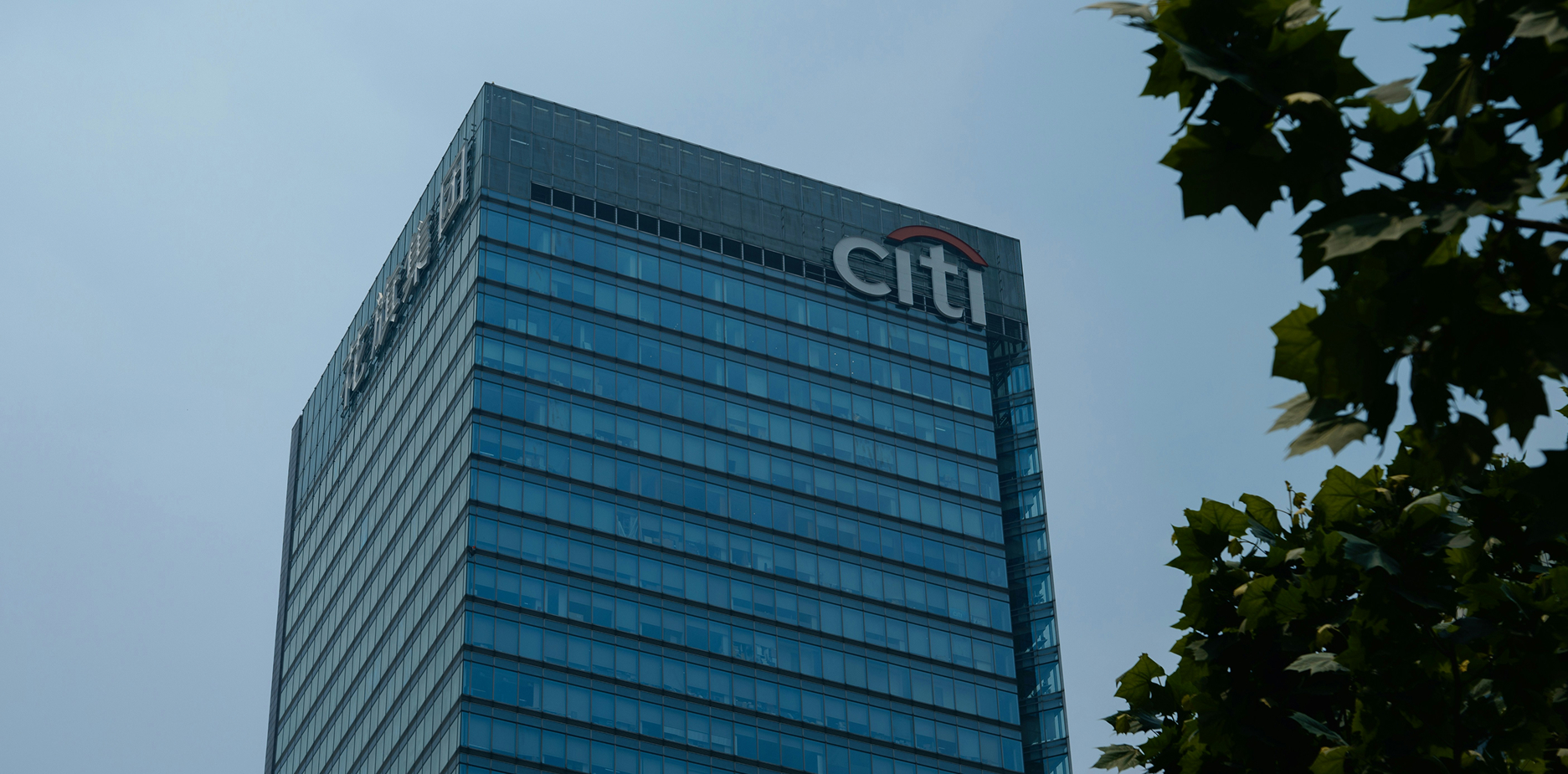
The first big wave of bank earnings is in, and the banks made a truly offensive amount of money.
JPMorgan pulled in $50.5 billion. Citi hit a ten-year revenue high. Bank of America notched its best per-share earnings in nearly two decades, and Morgan Stanley and Goldman Sachs practically ran out of room on the spreadsheet as their trading and dealmaking fees skyrocketed. Even Wells Fargo managed to beat profit expectations.
That probably sounds like a private conversation for people who wear fleece vests to earnings calls.
But it matters to normal people because banks sit in the middle of the economy's plumbing. They see whether consumers are still spending, whether businesses are still borrowing, whether more people are falling behind on debt, and whether Wall Street is making money because the economy is healthy—or because everyone is nervous and buying financial body armor.
Bank earnings are not just a scoreboard. They are an early read on the pressure inside the system.
And this week's read is pretty clear: the economy is still moving, consumers are still swiping, and dealmaking has a pulse. But a lot of that strength came from volatility, not serenity. All six major U.S. banks beat profit expectations, yet the large-cap bank index still trailed the broader market through the end of earnings week.
That is the market's way of saying, "Nice quarter. I still have questions."
The Consumer Is Still Spending. That Doesn't Mean the Consumer Feels Great.
Let's start with the part that matters most: the consumer has not rolled over.
JPMorgan CEO Jamie Dimon praised the resilience of the U.S. economy, noting that people are still spending and repaying debts. Bank of America saw card spending rise 7%, and Wells Fargo echoed that spending is holding up. People are still getting paychecks and mostly paying their bills. That is not what a consumer-led recession looks like.
But resilience is not the same thing as ease.
Wells Fargo executives pointed out that rising energy costs are putting visible pressure on households, estimating that consumers are spending 25% to 30% more on gas than before the recent geopolitical conflicts. When more of the paycheck goes to fuel and groceries, the "fun" categories get quietly squeezed later. Nobody cuts "keeping the car running" before they cut "one more dinner out." And with JPMorgan's credit card charge-off rates creeping up, it tells you that at least some households aren't just feeling stretched. They're falling behind.
That is the part people miss when they hear "healthy consumer." It doesn't mean everyone is thriving. It means the machine is still running, but it's a strained version of healthy—the kind where people are upright, functional, and quietly annoyed.
Wall Street Had a Great Quarter for Slightly Troubling Reasons
Now for the glamorous part: the trading desks had a monster quarter.
Across the board, trading revenues spiked by double digits. JPMorgan's markets revenue hit a record $11.6 billion. Citi jumped 19%. Bank of America posted its strongest trading quarter in 15 years, and Morgan Stanley and Goldman Sachs both posted record-breaking equities revenue.
It is incredibly impressive. It is also not automatically comforting.
Market volatility tied to Middle East tensions, energy shocks, AI-related stock swings, and private credit worries gave trading desks a lot to do. Banks made money because clients were hedging, rebalancing, repositioning, and trying very hard not to get run over.
That is activity. It is not calm.
Strong trading revenue is not the same thing as broad-based prosperity. Sometimes it means confidence is high. Sometimes it just means fear had excellent volume. This quarter looks a lot more like the latter.
The Deal Machine Has a Pulse Again
This is where the picture gets more encouraging. Companies are still willing to do things.
Investment banking fees surged everywhere—up 28% at JPMorgan, 36% at Morgan Stanley, and a massive 48% at Goldman Sachs. Global M&A value reached $1.38 trillion in the first quarter, making it the second-highest Q1 total on record.
Dealmaking is essentially a confidence test for corporate executives. Companies don't go shopping for acquisitions or hire bankers to rearrange their futures when they think the next six months are a trapdoor. So when banks talk about active pipelines, they're really telling you that corporate America still believes the future is worth investing in.
But this is cautious confidence, not exuberance. Dimon flagged mounting risks like geopolitical tension, sticky inflation, and global deficits in the same breath as his strong results. The deal machine has a pulse. It just has the pulse of someone checking his phone during turbulence.
Lending Is Back, and That Matters More Than One Hot Trading Quarter
For all the attention on Wall Street acrobatics, the most important banking story is still the boring one: lending.
Net interest income (the money banks make on the spread between loans and deposits) rose roughly 9% to 12% across heavy hitters like JPMorgan, Bank of America, and Citi. Wells Fargo pushed its total loans past the $1 trillion mark.
When net interest income rises because loan demand is improving, it tells you households and businesses still want to borrow. That means economic life hasn't seized up. People still think tomorrow exists. That is a much more useful signal than whether a trading desk had a heroic quarter because the market lost its mind for a few weeks.
That said, the dials remain irritatingly unstable. JPMorgan slightly trimmed its net interest income guidance for the rest of the year, signaling that the lending tailwinds of recent years are starting to normalize.
Private Credit Is the Part of the Room Everyone Keeps Checking Twice
One thread ran through multiple earnings calls this week that deserves side-eye: private credit.
JPMorgan disclosed $50 billion of private credit exposure. Citi holds $22 billion, and Bank of America has $20 billion. Morgan Stanley fielded pointed questions about redemptions from one of its private funds, with its CEO describing the $1.8 trillion private credit market as being in an "adolescent moment" full of careful scrutiny.
Private credit matters because it operates largely outside the normal banking system, with less transparency and regulatory oversight. It expanded rapidly during a period of low rates and easy money. Now, inflation is sticky, and borrowers are refinancing into a much tougher environment. None of the disclosures this week screamed immediate disaster, but they were more than enough to keep investors from treating this like the victorious final scene of a sports movie.
The Market Still Doesn't Fully Trust the Party
If this were a true all-clear moment, bank stocks should be acting like it. They are not.
Investors are judging durability, not just the scoreboard. They want to know whether strong trading, better deal fees, and a still-breathing consumer are enough to carry the rest of the year if private credit gets uglier, oil stays elevated, or growth slows.
Jamie Dimon explicitly stated that while he isn't forecasting a recession, JPMorgan is actively preparing for one—and for the possibility of stagflation. That is the kind of statement that only gets said out loud when someone has done enough scenario planning to think it's worth flagging publicly.
The banks are not flashing recession in neon. But they are also not singing karaoke. They are telling you the economy is still standing, doing it with less cushion, more selectivity, and considerably less margin for error. That is not a disaster. It is just not the same thing as easy.
Sources
- https://www.reuters.com/business/finance/jpmorgan-profit-rises-volatile-markets-drive-trading-division-2026-04-14/
- https://www.reuters.com/business/finance/citi-profit-jumps-42-market-volatility-lifts-trading-revenue-2026-04-14/
- https://www.reuters.com/sustainability/boards-policy-regulation/bank-america-profit-rises-trading-shines-2026-04-15/
- https://www.reuters.com/business/finance/morgan-stanleys-profit-rises-dealmaking-trading-boost-2026-04-15/
- https://www.reuters.com/legal/transactional/goldman-sachs-posts-higher-profit-strength-dealmaking-equities-trading-2026-04-13/
- https://www.reuters.com/business/finance/wells-fargo-profit-rises-interest-income-boost-2026-04-14/
- https://www.reuters.com/business/finance/wall-street-bank-earnings-five-charts-volatile-markets-take-center-stage-2026-04-16/
- https://www.reuters.com/business/finance/banks-show-trading-strength-caution-economic-risk-2026-04-14/
- https://www.reuters.com/legal/transactional/wall-street-still-betting-2026-deal-boom-middle-east-unrest-adds-caution-2026-04-15/
- https://www.reuters.com/business/finance/us-bancorp-profit-jumps-interest-income-fee-revenue-boost-2026-04-16/
- https://www.cnbc.com/2026/04/14/jpmorgan-chase-jpm-earnings-1q-2026.html
- https://www.cnbc.com/2026/04/13/goldman-sachs-gs-earnings-1q-2026.html
- https://www.cnbc.com/2026/04/14/citigroup-c-earnings-1q-2026.html
- https://www.cnbc.com/2026/04/15/bank-of-america-bac-earnings-q1-2026.html
- https://finance.yahoo.com/markets/stocks/articles/morgan-stanley-ms-q1-2026-162845269.html
- https://www.aol.com/finance/increasingly-complex-set-risks-jamie-091500493.html
Market Munchies and Mode Mobile communications are for informational purposes only, and are not a recommendation, solicitation, or research report relating to any investment strategy, security, or digital asset. All investments involve risk including the loss of principal and past performance does not guarantee future results.
Any information contained in this commentary does not purport to be a complete description of the securities, markets, or developments referred to in this material. The information has been obtained from sources considered to be reliable, but we do not guarantee that the foregoing material is accurate or complete. There is no guarantee that any statements or opinions provided herein will prove to be correct.